
When More Research Does Not Mean More Startups: Four Perspectives on How Spinoffs Actually Get Built
Wednesday Sep 23,2026 | IIE News
For decades, governments and universities have operated on a straightforward assumption: more research leads to more innovation, and more innovation leads to more startups. But growing evidence suggests the relationship is far less direct.
Research excellence remains essential, yet it does not fully explain why some universities consistently generate successful spinoffs while others struggle despite comparable investments and scientific output. Increasingly, attention is shifting from the volume of research produced to the environment surrounding it, including policies, incentives, talent and ecosystem connections that help discoveries reach the market.
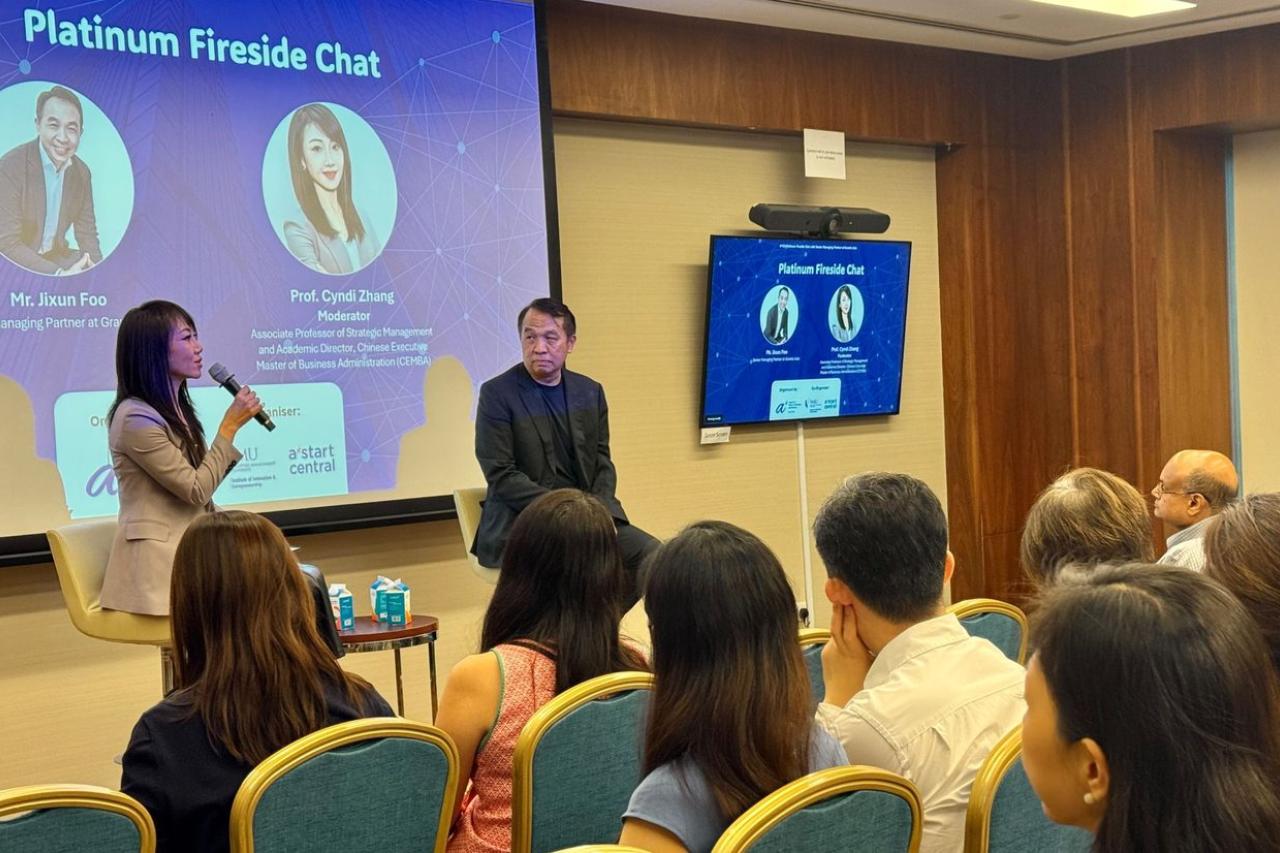
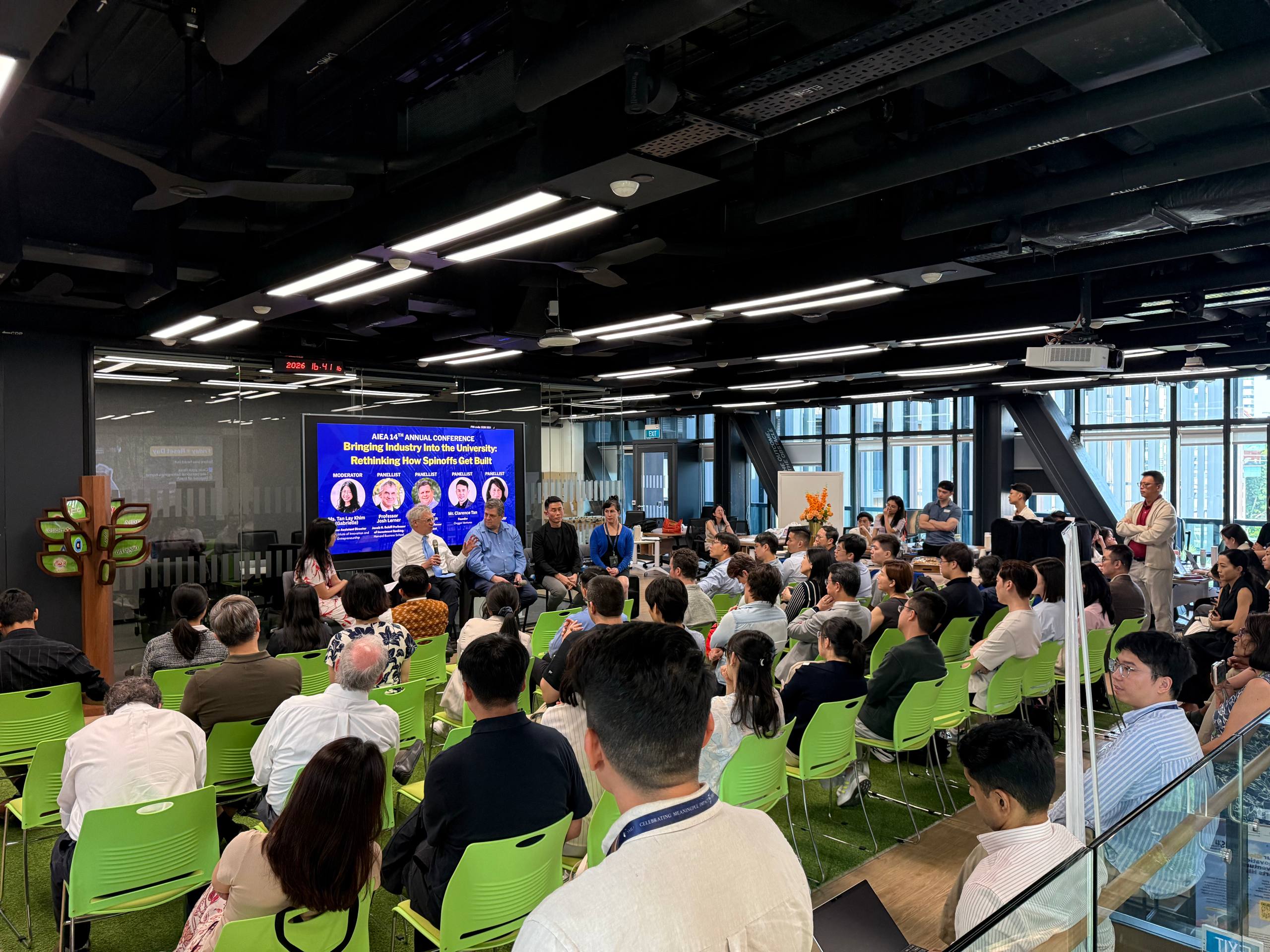
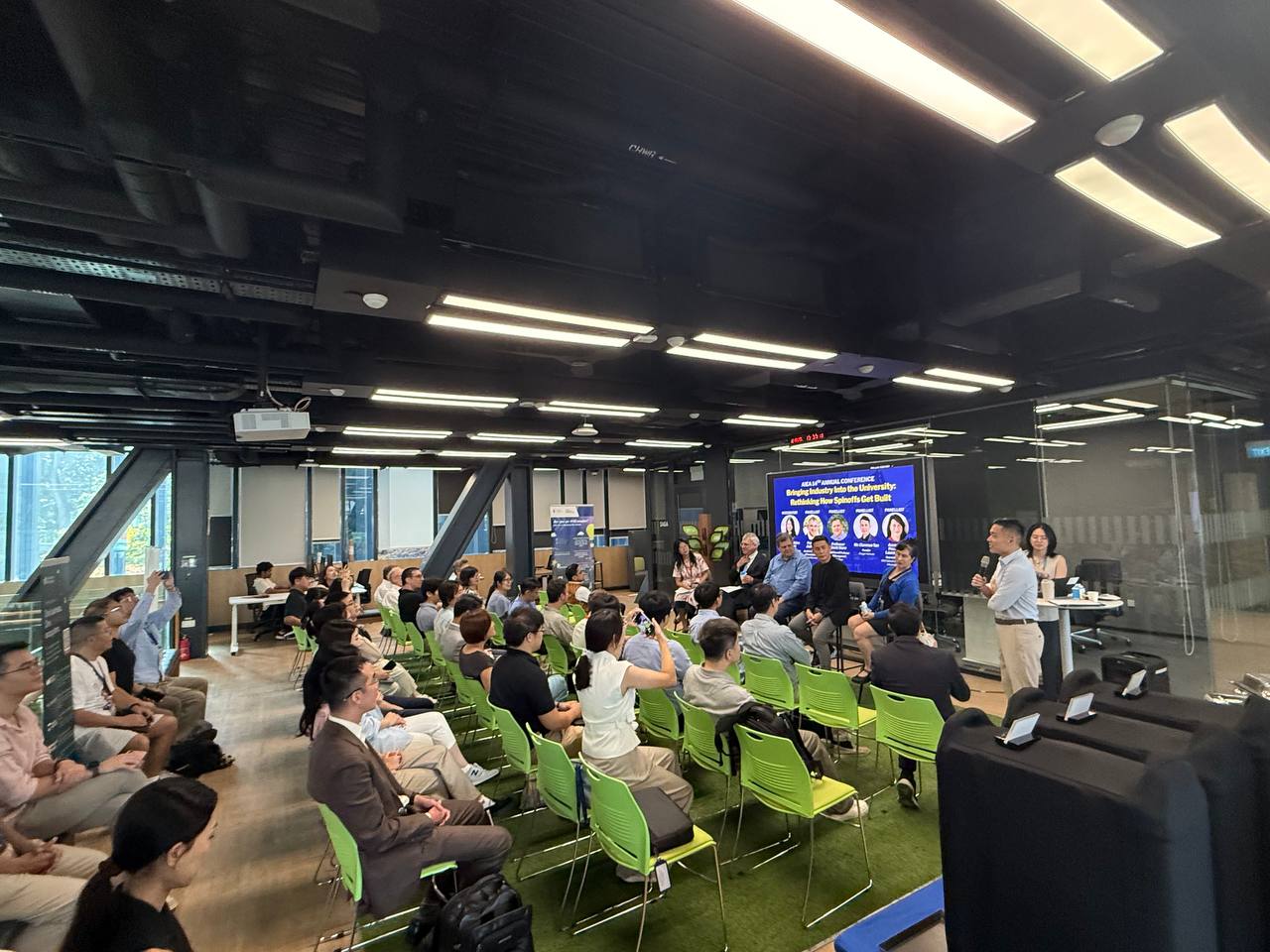
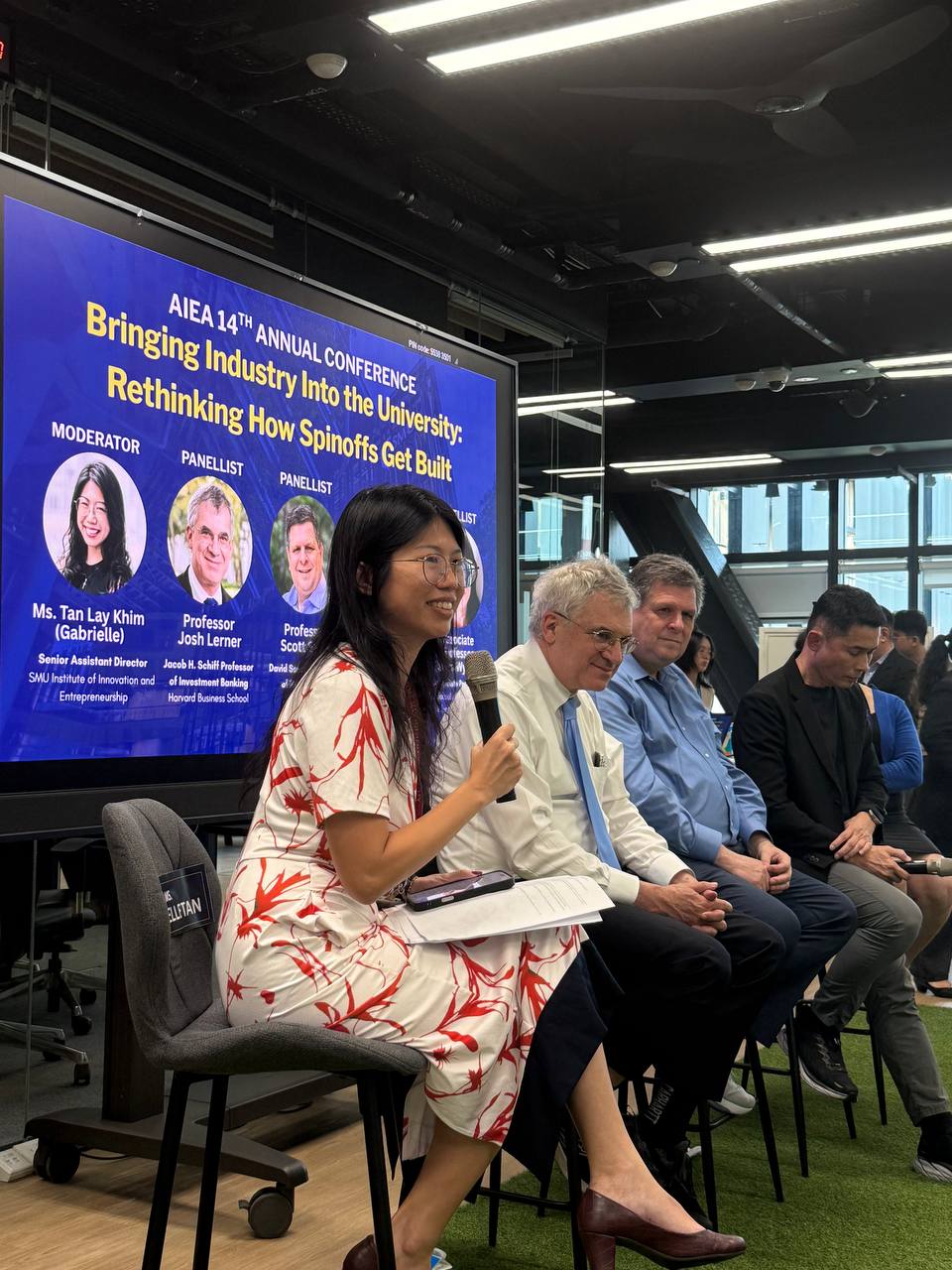
These questions were at the centre of a recent panel discussed organized by the Asian Innovation and Entrepreneurship Association (AIEA) and the National Bureau of Economic Research (NBER), hosted by SMU, which brought together four leaders who have approached university commercialisation from different perspectives. The panel featured Professor Josh Lerner of Harvard Business School, one of the world's most cited scholars on venture capital and university entrepreneurship; Professor Scott Stern of MIT Sloan School of Management and co-founder of MIT REAP; Associate Professor Laura Wynter of SMU's School of Computing and Information Systems, who spent two decades at IBM Research; and Clarence Tan, founder of Origgin Ventures, which has co-created 45 startups with university laboratories across Asia.
Together, they offered a candid look at why some research reaches the market and some never does.
More research does not automatically mean more companies
Professor Lerner brought a single slide. It plotted the quality of universities' research against the number of companies that research goes on to produce, and its purpose was to unsettle an assumption almost everyone in the room shared.
The assumption is one most countries build innovation policy on. We increase the inputs, meaning more research funding, more publications, a higher research-to-GDP ratio, and we wait for companies to appear at the other end. Call it the input model: put more research in, and more companies should come out. While that approach appeared to have worked, the return on that spending varies enormously between one university and the next, in ways the spending itself does not explain.
If the input model held, the universities with the best science would consistently produce the most companies, and the slide would have shown a clear upward slope. Instead it showed a scatter, with the points sitting all over the place. In 2016 both Duke and Stanford spent close to a billion dollars on academic research. Stanford recorded 32 spinoffs that year. Duke recorded nine.
His research with Henry Manley, Carolyn Stein and Heidi Williams, forthcoming in Econometrica, tries to work out why. The team tracked just over 14,000 life sciences researchers who moved between universities, on the reasoning that when a scientist moves, their ability and their field stay the same while their surroundings change. Their estimate is that between 15 and 25 per cent of the difference in whether academics commercialise their research is explained by where they are based, rather than by their field or their own characteristics.
That is not everything, and the authors are careful to say so. But it does mean that a meaningful share of what we usually attribute to talent or discipline actually belongs to the surroundings. And unlike a scientist's ability, the things that make up those surroundings are within a university's control.
The pipeline has changed, and our policies have not caught up
If inputs matter less than we assume, why did the input model ever work?
Professor Stern explained how this used to work, and why the assumptions built into that older arrangement are still sitting inside the rules many universities operate today. For most of the history of university technology transfer, the large majority of what was licensed, by his account around eighty per cent, went to established corporations.
That arrangement is what made the input model work. The university's job ended at the licence. Whoever bought it already had the laboratories to develop the technology further, the manufacturing to make it, the sales force to sell it and the patience to spend time doing so. Nobody had to hurry, because the organisation doing the commercialising already existed. A faculty member who stayed involved in the venture was the exception rather than the rule.
Neither half of that arrangement still holds. The customer has changed, and the expectation has changed with it.
The customer first. Across US institutions, startups and small companies now account for over three-quarters of all licensing agreements. The Association of University Technology Managers (AUTM) recorded a fall of almost a quarter in agreements with large companies between 2015 and 2020, even as total licences and options rose by more than a quarter over the same years.
The expectation has shifted just as far. Rules on conflict of interest and conflict of commitment were written on the assumption that somebody else would be the founder. Today the working assumption at many universities is that the faculty member is involved in the company commercialising their research, and institutions have had to rebuild around that.
Why speed has become the university's problem
The practical consequence is that speed now matters in a way it did not before. A large corporation could wait four months for an answer from a licensing office, because it had other products and other revenue in the meantime. A startup has a small amount of money, a handful of people, and competitors working on the same idea elsewhere, which makes it far more fragile. An AUTM survey found that in 2020, university startups closed at roughly double the rate of the preceding four years. The university is no longer handing its research to an organisation that can absorb delay, which means its own processes may decide whether the spinoff gets off the ground.
Associate Professor Wynter, who spent twenty years inside corporate research, put the contrast simply. Inside a global corporation, the calendar belongs to the machine, because the work depends on colleagues and approvals spread across the world. Inside a university, "the calendar is our own." The institution long assumed to be the slow one turns out to be the place where a founder can still control her own pace, if its processes allow her to.
Speed is not something achieved simply by instruction, but is affected by a series of decisions including licensing terms, availability of commercial talent and, more obviously, ownership.
Clarence was blunt about the pattern that reliably causes trouble, which is excessive ownership by the faculty inventor. He shared the story of an inventor who insisted on holding ninety per cent of the company. Clarence handed the company back to the professor, and his parting reply has stayed with me: one hundred per cent of zero is zero. The venture eventually failed. Ownership is not just a reward for having invented something. It is what gives each person a reason to commit. If the commercial team's stake is too small to be worth their years, they will not stay, and if the investors' stake is too small, they will not fund it.
Where a piece of that environment is missing altogether, someone has to build it. Clarence used the story of EMASS to describe the role that venture builders play. EMASS is a chip venture founded on research from NTU. Venture capital investors thought the technology was still too far from a product to back. Research funders thought it had moved beyond the science they exist to support. It fell between the two. Origgin invested and placed an interim commercial team alongside the founding professor, who remained in his laboratory, and worked with him to find industry partners willing to pilot the technology. When the economics of semiconductors demanded resources no small company could raise, the company was acquired by Nanoveu, listed on the Australian Securities Exchange, in a deal completed in March 2025. The story left us with a practical lesson: a missing commercial team is not a gap that closes on its own, and a university that knows who can fill it, and brings them in early, gives its spinoffs a very different start from one that waits.
What this means for SMU
Four panellists, four starting points — and one recurring theme: the environment around research shapes whether it becomes a company. And unlike a researcher's ability, the environment is something a university can build. That is the premise of the work we do at SMU's Institute of Innovation & Entrepreneurship.
Most deep tech spinoffs begin in engineering and life science laboratories, and SMU is not an engineering or life-sciences university. What we do produce, in quantity, is the input the panel kept returning to: commercial talent, the people who carry research the last mile to a market, alongside computing graduates who can build the product itself. Our work is to train that talent, and to put it where the ventures are.
Some of that happens at scale. In its most recent edition, the Lee Kuan Yew Global Business Plan Competition drew applications from deep tech founders building sustainability and urban solutions startups in more than 90 countries and 1,200 universities, bringing the strongest of them to Singapore, so our ecosystem can measure itself against the world's best and learn from them. Our students help us run it — learning by doing, working alongside some of the best young founders anywhere, and seeing first-hand what global competitiveness looks like. Protégé Ventures, the region's first student-run venture fund, trains students to evaluate and back real ventures — building investor talent, connective tissue for any startup ecosystem. The Singapore India Hackathon pairs our builders with counterparts across two fast-growing regions, India and Southeast Asia — practice for the journey most ventures in this region eventually make.
And with Spring Board, we are starting smaller and closer to home. Clarence's story made the point: a missing commercial team does not close on its own. Springboard is our attempt to close it early — a vetted board where startups across our ecosystem post the gigs and projects they need filled, so a founder short of hands and a student who never knew the work existed can find each other.
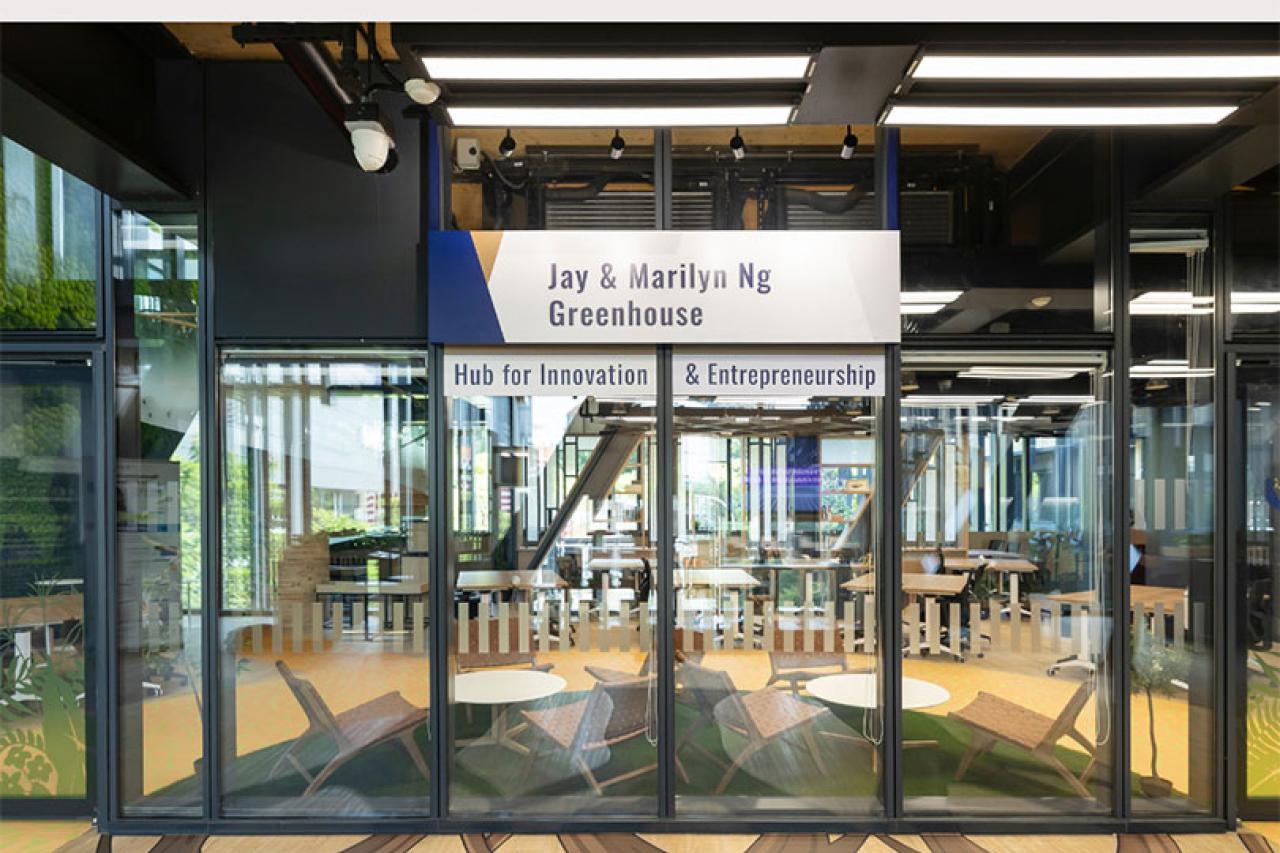
Venture builders get the headlines, but an ecosystem also needs community builders and talent builders, and we are deliberately growing all three. The place where they meet is the Jay and Marilyn Ng Greenhouse, and if the panel taught us anything, it is that the place matters.
Gabrielle Tan is Senior Assistant Director at SMU's Institute of Innovation & Entrepreneurship. Applications for the 13th Lee Kuan Yew Global Business Plan Competition (LKYGBPC) open in October.