


DeepShield: Explainable Multimodal Deepfake Detection
The rapid advancement of deepfake technologies is making manipulated media increasingly difficult to distinguish from authentic content. For organisations, this creates significant exposure to fraud, impersonation, operational disruption, reputational damage and loss of stakeholder trust. DeepShield is an explainable, multimodal deepfake detection technology designed to help organisations assess the authenticity of digital media.

AI Powered Audio Diary Analytics for Student Wellbeing Insights
VoiceSense is an AI powered audio diary analytics system that transforms short student voice reflections into actionable wellbeing insights. Through a mobile app, students record natural reflections that are transcribed, anonymised, and analysed to detect stress, motivation, emotion, and experience trends at scale. The technology offers a privacy conscious AI layer for student support, engagement analytics, and digital wellbeing solutions.

CVMI: Next-Generation Native-Speed Virtual Machine Introspection for Secure Cloud Environments
Virtual Machine Introspection (VMI) is the foundational technology for modern cloud security, enabling intrusion detection, live forensics, and auditing. However, current VMI deployments (like LibVMI) are inherently host-based, operating within the hypervisor or privileged management domains. This introduces significant operational and security bottlenecks: it exposes the hypervisor to sophisticated attack vectors and creates a fundamental conflict of interest regarding tenant privacy and cloud provider incentives.
GuardShare: Secure Cloud Data Sharing System
Public cloud storage has become the backbone of modern enterprise collaboration, prized for its scalability, accessibility, and cost efficiency. Yet a case study of six mainstream cloud storage platforms reveals three persistent security gaps: the lack of native or universally available end-to-end encryption (E2EE), reliance on third-party key-management services that introduce additional trust assumptions and single points of failure, and inflexible or inefficient permission revocation.
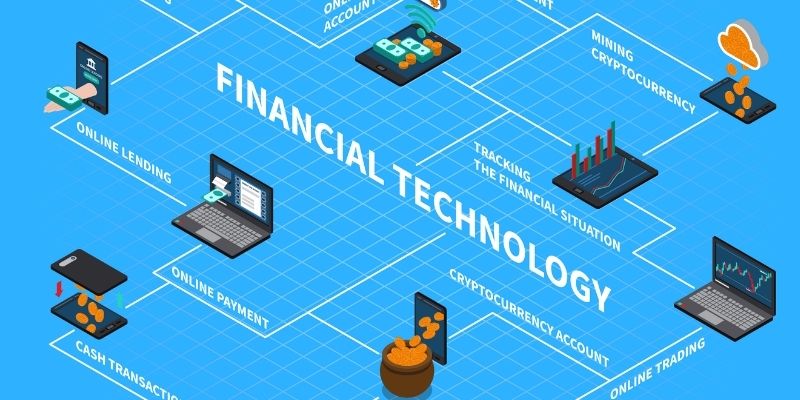
NARFIN - Digital Financial Innovation Platform
NARFIN (Narwhal Financial Systems) is a Singapore-based fintech spin-off from SMU, delivering next-generation digital banking and financial management solutions. NARFIN’s platform empowers banks, remittance houses, MNCs, and digital financial institutions to streamline treasury, remittance, and core banking operations with modular, cloud-ready systems. The company’s technology is proven in production environments and trusted by leading clients in Asia.
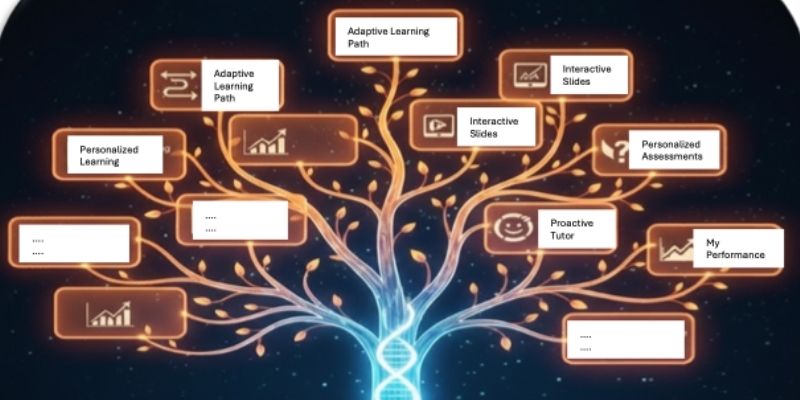
Aacharya.ai: Human Ability-Driven Learning Guide
Future of learning isn’t a static course, but an intelligent AI guide that adapts to the learner. Aacharya is an enterprise grade trustworthy AI-based training and assessment guide, built ground up after years of research on human-ability-modelling, that automates generation of training and assessment content based on private un-curated raw data, human-ability and science of learning principles.

AI-Driven Spatio-Temporal Prediction Model for Taxi Demand Prediction
While ride-hailing market share has been growing steadily since 2015, taxis are still in high demand in certain geographies due to stricter regulations on ride-hailing. Yet, supply-demand mismatches still persist due to poor taxi positioning. On the other hand, hotspot maps provide only current demand snapshots without forecasting future passenger needs or guiding supply responses. Ride-hailing surge pricing mechanisms fail to optimise fleet movement, providing only the current state of passenger demand.

Technology Enhanced Learning (TEL)
Technology Enhanced Learning (TEL) is about using technology to help students achieve learning outcomes in a course by positively influencing their learning behaviour, as well as enhancing their knowledge construction and social interaction. Throughout the years, the Centre for Teaching Excellence have been helping faculty members to develop innovative TEL Projects that help to drive and achieve course learning outcomes.
HyperAgent - Enhanced Multi-Agent Technology for Software Development
HyperAgent is a cutting-edge multi-agent framework designed to revolutionize the software development landscape. By harnessing the power of natural language processing, HyperAgent enables users to articulate their software requirements in a clear and intuitive manner. This framework operates within Version Control Systems (VCSes), like GitHub, streamlining the process of software generation, particularly for smart contracts in the Solidity programming language.

Mando-LLM: Smart Contract Bug Detection Technology
The Mando-LLM framework presents an innovative approach to smart contract bug detection, leveraging advanced machine learning techniques for improved accuracy and adaptability. In a rapidly evolving digital landscape where blockchain technology is becoming increasingly central, ensuring the security and reliability of smart contracts is paramount. Mando-LLM enhances the detection of bugs by utilising a combination of semantic-aware code.